If your boxwoods have started looking thin, patchy, or chewed, a new pest may be to blame. The Box Tree Moth (Cydalima perspectalis) has recently made its way to Michigan, and it’s bad news for gardeners. Left untreated, this invasive insect can strip a mature boxwood bare in a matter of weeks. Here’s what you need to know to spot, stop, and help your plants recover.
What to Look For
1. The Moth Itself
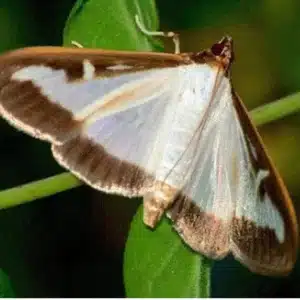
Adult box tree moths have white wings edged with a brown border. Some may be completely brown. They are most active at night and may go unnoticed.
2. Caterpillars (Most Damaging Stage)
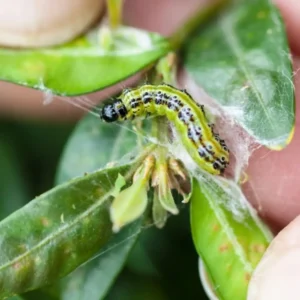
- Green bodies with black and white stripes
- Dark head with small white dots
- Grow up to 1.5 inches long
These caterpillars feed heavily on boxwood leaves and even chew on the green bark.
3. Signs of Infestation
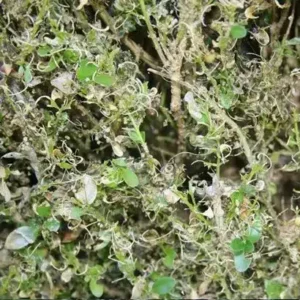
- Skeletonized leaves — green tissue eaten away, leaving leaf veins

- Webbing and silk threads between leaves and stems

- Frass (caterpillar droppings) — tiny greenish-black pellets under the shrub
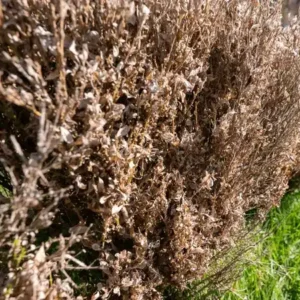
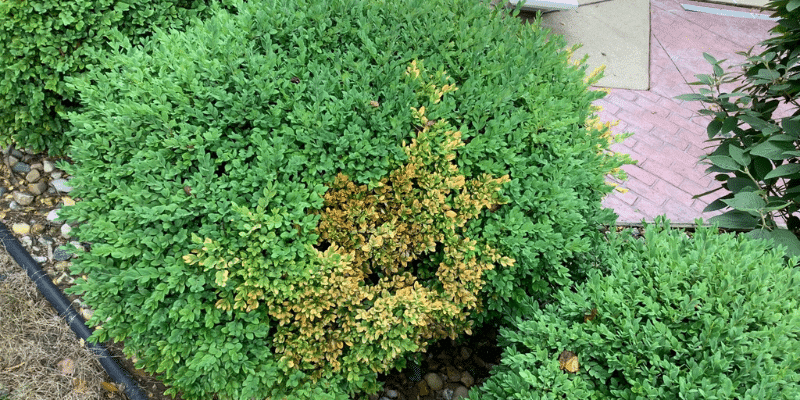
- Rapid thinning or brown patches in foliage
How to Treat
1. Act Quickly
Once feeding damage is visible, caterpillars can strip a plant in days. Immediate action is key.
2. Physical Removal
- Inspect plants closely and hand-pick caterpillars.
- Prune out heavily infested areas, disposing of clippings in sealed bags.
3. Recommended Treatments
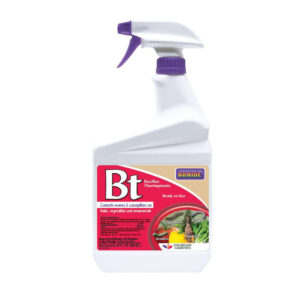
- Btk (Bacillus thuringiensis kurstaki):
- A naturally occurring bacteria that specifically targets caterpillars without harming beneficial insects. Best applied when caterpillars are small. Spray thoroughly, making sure to reach inside the shrub where they hide.

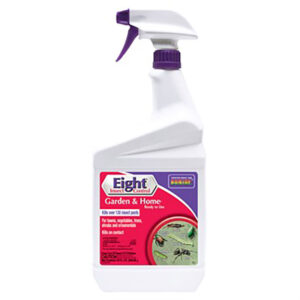
- Eight Insect Control:
A broad-spectrum insecticide effective against caterpillars, beetles, and other pests. Follow label directions carefully, coating all foliage and stems for best results. 
- Turbo Grow:
A spray additive that helps insecticides stick to leaves and penetrate pests’ hiding spots. Mixing Turbo Grow with Btk or Eight increases effectiveness, especially in dense boxwood foliage.
4. Monitor and Repeat
Box tree moths can have multiple generations in a single season. Recheck plants every 1–2 weeks and reapply treatments as needed.
How Long for Boxwoods to Recover?
Recovery depends on the extent of the damage:
- Light Damage: If only some foliage is removed, healthy boxwoods can push new growth within a few weeks to months.
- Moderate Damage: Plants may look sparse for the rest of the season but usually fill in the following spring with proper care.
- Severe Defoliation: If all leaves are stripped and stems are chewed, recovery can take 2–3 years — and in some cases, plants may not survive.
Boost Recovery With:
- Regular watering during dry spells
- Balanced slow-release fertilizer in spring
- Pruning dead or damaged branches to encourage new shoots
- Mulching around the base to conserve moisture and protect roots
Final Tips
- Stay vigilant — inspect boxwoods often, especially from spring through fall.
- Apply Btk or Eight mixed with Turbo Grow at the first sign of damage.
- Healthy, well-cared-for shrubs bounce back faster and handle stress better.
For more help with boxwoods, or other plant issues, please stop by your nearest English Gardens location and speak with a garden pharmacist.